|
Published:
October 27, 2025

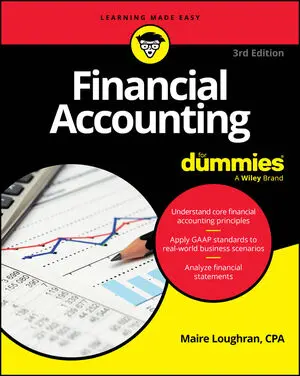
Financial Accounting For Dummies

Overview

Learn to speak fluent finance—and ace your exams!

Warren Buffett said that "accounting is the language of business." And for many accounting and business students, the obscure terminology of accounting makes fluency hard to achieve. Financial Accounting For Dummies can help to demystify abstract concepts in a straightforward, friendly way. With step-by-step examples and real-world scenarios practice, it helps you grasp the fundamentals of accounting until you're ready to interpret, analyze, and evaluate corporate financial statements like you've been doing it all your life.

Packed with easy-to-understand examples, this book takes you from the big three financial statements all the way through to income taxes. Or join the anti-fraud squad by discovering how to spot the ten most common accounting shenanigans.

  • Grasp introductory financial accounting course material
  • Explore common concepts financial professionals use to compile reports
  • Understand leases, free cash flow, and statement analysis
  • Learn accounting for small businesses

Whether you're studying for your bachelor's, MBA, or MAcc, you’ll find everything you need to speak the language of finance like a native—and use it to get to wherever you want to go!

Read More

About The Author

Maire Loughran, CPA, is a university professor who teaches both undergraduate and graduate accounting classes. She is the author of Auditing For Dummies as well as the previous edition of Financial Accounting For Dummies.

Sample Chapters

financial accounting for dummies

CHEAT SHEET

Financial accounting is the process of preparing financial statements for a business. The three key financial statements are the income statement, balance sheet, and statement of cash flows. They serve two broad purposes: to report on the current financial position of the company, and to show how well the company performs over a period of time.

HAVE THIS BOOK?

Articles from
the book

The three key financial statements are the income statement, balance sheet, and statement of cash flows. All three record the same daily accounting transactions occurring in a business, but each presents the facts slightly differently. Income statement: The income statement shows a company’s results of operations.
Financial accounting is the process of preparing financial statements for a business. The three key financial statements are the income statement, balance sheet, and statement of cash flows. They serve two broad purposes: to report on the current financial position of the company, and to show how well the company performs over a period of time.
In a financial accounting class, and on the job as an accountant, you need to know some jargon. Following is a glossary of words and phrases crucial to the accounting profession. Users of financial accounting information: The people or businesses that need to see the accounting transactions organized into financial statements to make educated decisions (such as whether to invest in or loan money to a company).
As a financial accountant, you may choose to work in public accounting (doing jobs for multiple business clients) or private accounting (performing accounting work only for your employer). You can also choose to specialize in governmental accounting, not-for-profit accounting, forensic accounting (which relates to legal proceedings or testimony), or other specific fields.
https://cdn.prod.website-files.com/6630d85d73068bc09c7c436c/69195ee32d5c606051d9f433_4.%20All%20For%20You.mp3

Frequently Asked Questions

No items found.